For me the biggest news (of the week, if not the century!) was that on Monday the BBC at last found the courage to say that the weather forecast was for hot weather within a “changed climate”!
About 200 years late!
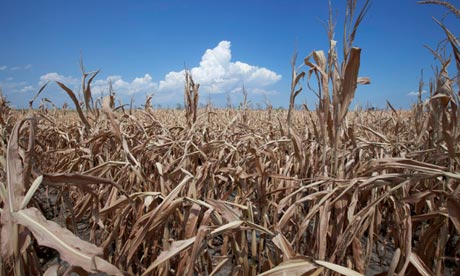
We discussed this in school science in 1956. Some of the landmarks along the way to today are listed below.
1827
The French mathematician and physicist Fourrier, most famous for his technique of Fourrier transformation. He showed that most repeating variations in some property may be resolved into a collection of sinusoidal variations of differing frequencies and amplitudes which, when summed, reproduce the original observed pattern of complex variations. He showed how you could often find order – and then perhaps explanations – in apparently disorded situations.
He was also interested in the heat balance of our planet and published a scientific paper in 1827 but could not reconcile his calculations with actual measurements – unless it was assumed that the atmosphere itsef was acting as a form of insulator. However he was unable, with the knowledge of that time, to offer any explanation as to how that might work.
1896
Basic on earlier work by others on interactions between electromagnetic radiation and gases and looking at the phenomenon of infrared radiation capture, as mediated by carbon dioxide, the Swedish physicist, Svante Arrhenius, in 1896 published a paper in which he predicted there would be an increase in global temperature as the atmospheric carbon dioxide level increased. He even made an estimate of the likely temperature increse. This, he said would be a 2 dec C increase for every 50% increase in carbon dioxide.
Although something of an overestimate, this is very close to position the world finds itself at in 2026.
1912
The first warning in the media occurred when, in New South Wales, a mining industry journal highlighted the danger of global warming from burning coal and oil – appropriately enough since Australia mines and burns huge quanatities of coal and N S Wales was aleady quite hot!
1938
Working on his own, but based on actual measurements from 147 weather stations, a former British steam engineer Guy Callendar explicitly linked industrial emissions to observed global warming. He was the first person to correlate rising levels of atmospheric carbon dioxide with actual temperature increases and made the accurate estimate that global temperatures had consequently risen 0.3°C over the previous 50 years of industrial activity.
1959
US weapons scientist, Edward Teller, warned the US energy industry about the impact on the climate of burning fossil fuels.
1965
US climatologist Charles Keeling accurately correlated temperature rises with atmospheric carbon dioxide levels and warned US President Lyndon Johnson of the dangers.
1979
The World Meteorological Organization hosted the first World Climate Conference, concluding with a consensus view that increases in atmospheric carbon dioxide are likely to cause gradual global warming.
2026
HOW MANY MORE WARNING DO YOU NEED?